
Korean Beef Bulgogi Rice Bowls — Korea
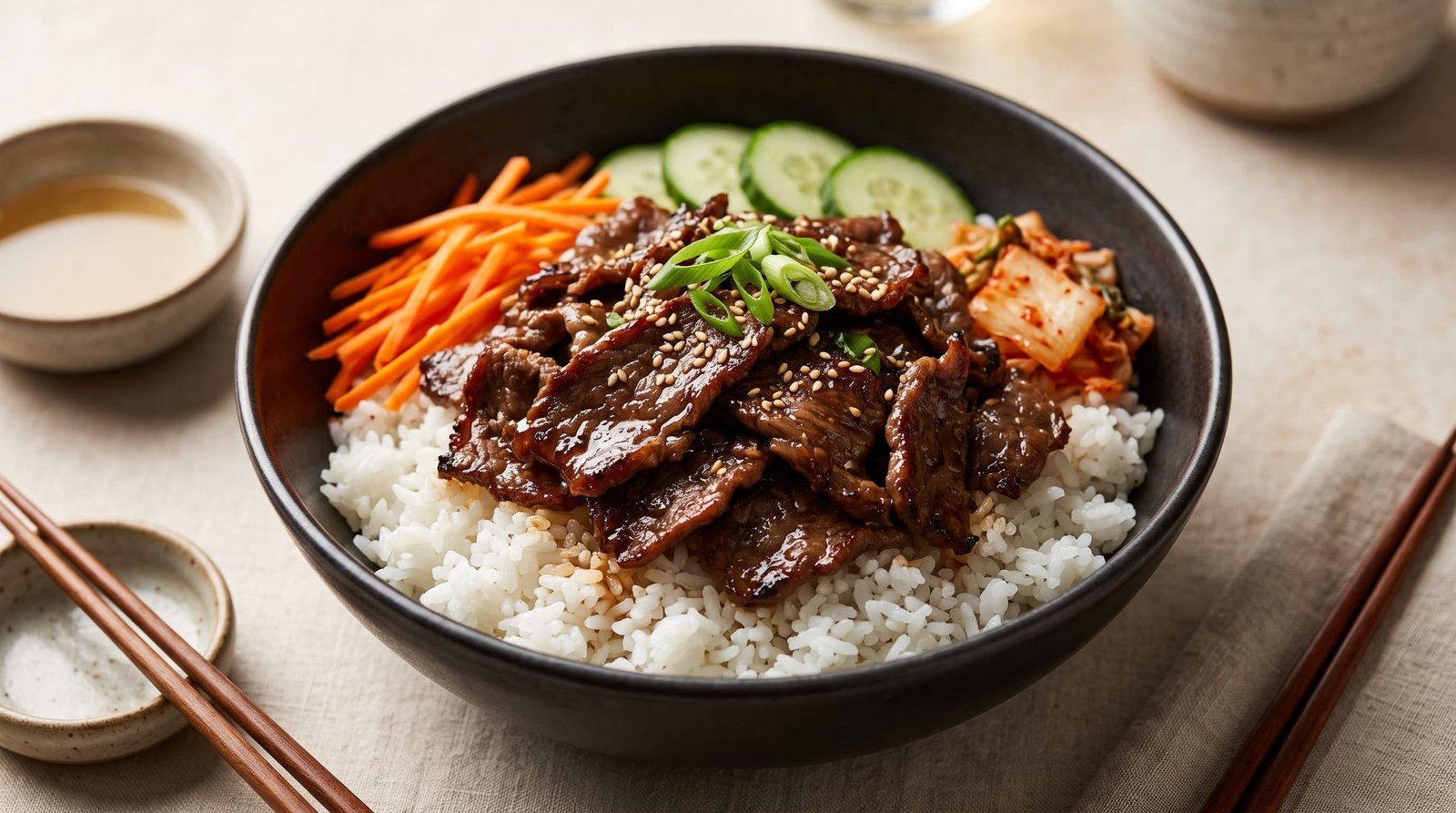
Sweet, savory, juicy, and packed with irresistible Korean flavor, Korean Beef Bulgogi Rice Bowls are an easy way to bring a favorite Korean dish to your dinner table. Thinly sliced beef is marinated in a flavorful mixture of soy sauce, sesame oil, garlic, ginger, and a touch of sweetness, then quickly cooked until beautifully caramelized around the edges.
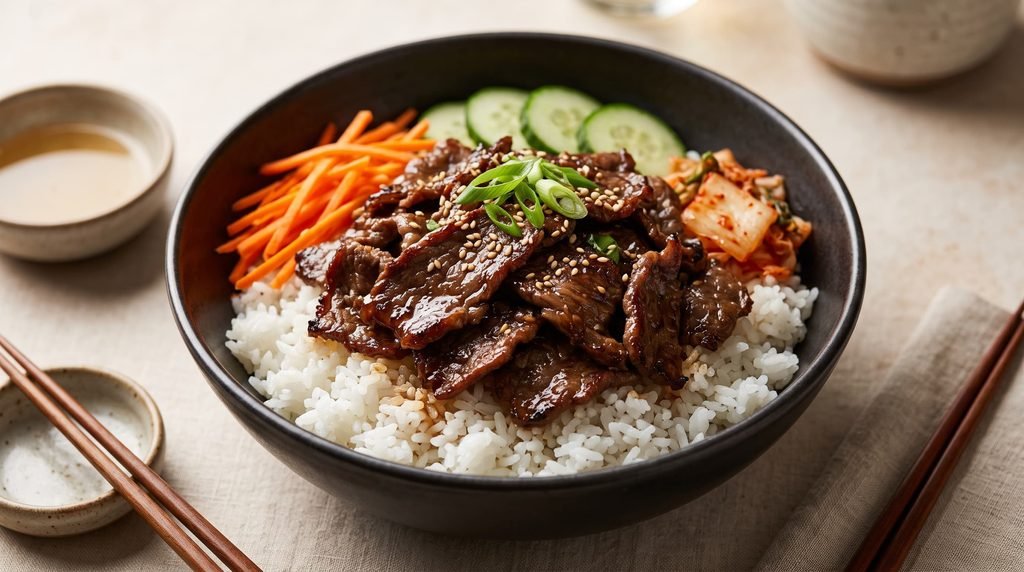
Served over warm steamed rice with crisp vegetables, green onions, and toasted sesame seeds, these bowls offer the perfect balance of tender beef, fluffy rice, fresh crunch, and rich umami flavor.
Whether you’re preparing a quick weeknight dinner, meal prepping lunches, or simply craving Korean comfort food, this bulgogi bowl is satisfying, colorful, and incredibly easy to customize.
Why You’ll Love These Korean Beef Bulgogi Rice Bowls
- Fast and flavorful: Thinly sliced beef cooks in just minutes.
- Incredibly tender: The marinade infuses the beef with deep flavor and helps create a juicy texture.
- Sweet and savory: Soy sauce, brown sugar, garlic, sesame oil, and pear create a beautifully balanced sauce.
- Perfect for meal prep: The components can be prepared ahead for easy lunches and dinners.
- Colorful and fresh: Crisp vegetables add freshness and contrast to the rich beef.
- Easy to customize: Add your favorite vegetables, sauces, and toppings.
- Family-friendly: Adjust the spice level to make the bowls mild or fiery.
What Makes Korean Bulgogi So Good?
The magic of bulgogi comes from the marinade and the way the beef is cooked.
Traditional Korean bulgogi commonly uses thinly sliced beef combined with a marinade containing ingredients such as soy sauce, garlic, sesame oil, sugar, and aromatics. Pear or another fruit may also be used to add sweetness and help tenderize the meat.
The beef should be sliced very thinly and cooked over relatively high heat. This allows the marinade to caramelize around the edges while keeping the meat juicy.
For a rice bowl, the rich beef is balanced with fresh vegetables and warm rice, creating a complete meal with plenty of contrasting flavors and textures.
Ingredients
For the Bulgogi Marinade
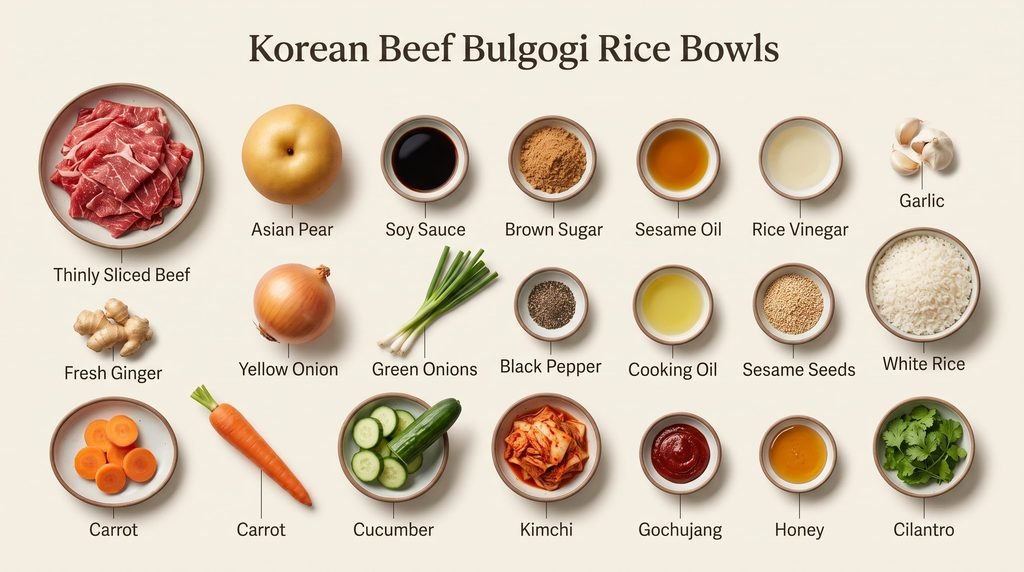
- 1½ pounds thinly sliced beef, preferably ribeye or sirloin
- ½ Asian pear, grated
- ¼ cup soy sauce
- 2 tablespoons brown sugar
- 1 tablespoon sesame oil
- 1 tablespoon rice vinegar
- 4 cloves garlic, minced
- 1 tablespoon fresh ginger, grated
- ½ small yellow onion, finely grated
- 2 green onions, finely chopped
- ½ teaspoon freshly ground black pepper
For Cooking
- 1 tablespoon neutral vegetable oil
- 1 teaspoon toasted sesame seeds
For the Rice Bowls
- 4 cups cooked white rice
- 1 medium carrot, julienned
- 1 small cucumber, thinly sliced
- 2 green onions, thinly sliced
- Kimchi, optional
- Toasted sesame seeds
- Fresh cilantro or additional green onion, optional
Optional Spicy Sauce
- 2 tablespoons gochujang
- 1 tablespoon sesame oil
- 1 teaspoon rice vinegar
- 1 teaspoon honey
- 1–2 teaspoons water
Ingredient Notes
Beef: Ribeye is an excellent choice because its marbling keeps the meat juicy and flavorful. Sirloin works well if you prefer a leaner cut.
Asian pear: Asian pear adds natural sweetness and a subtle fruity flavor. It also contributes enzymes that can help tenderize the beef.
Soy sauce: Use regular soy sauce for a balanced savory flavor. If using low-sodium soy sauce, adjust the seasoning after cooking.
Sesame oil: A small amount provides the characteristic nutty Korean flavor. Use toasted sesame oil for the strongest aroma.
Brown sugar: This helps balance the salty soy sauce and encourages beautiful caramelization during cooking.
Gochujang: Korean fermented chili paste adds depth, sweetness, and heat. It is optional if you prefer a mild bowl.
Rice: Short- or medium-grain white rice works particularly well because it provides a soft base for the flavorful beef.
How to Make Korean Beef Bulgogi Rice Bowls
1. Prepare the Beef
If the beef isn’t already thinly sliced, place it in the freezer for approximately 20–30 minutes. This firms the meat and makes it easier to slice very thinly.
Slice the beef against the grain into thin strips.
Place the beef in a large bowl.
2. Make the Marinade
Add the grated Asian pear, soy sauce, brown sugar, sesame oil, rice vinegar, garlic, ginger, grated onion, green onions, and black pepper to a bowl.
Whisk until well combined.
Pour the marinade over the beef and gently toss until every piece is coated.
Cover and refrigerate for at least 30 minutes.
For deeper flavor, marinate for 2–4 hours.
Avoid excessively long marination, especially when using a significant amount of fresh pear, as the texture of the meat can become too soft.
3. Prepare the Bowl Ingredients
While the beef marinates, cook the rice according to the package instructions.
Prepare the carrot, cucumber, green onions, kimchi, and any additional toppings.
If making the spicy sauce, whisk the gochujang, sesame oil, rice vinegar, honey, and water together until smooth.
4. Cook the Bulgogi
Heat a large skillet, cast-iron pan, or wok over medium-high to high heat.
Add the vegetable oil.
Remove the beef from the marinade, allowing excess liquid to drain slightly.
Add the beef to the hot pan in batches. Avoid overcrowding the pan because too much beef at once will release moisture and cause it to steam rather than caramelize.
Cook for approximately 2–4 minutes per batch, turning occasionally, until the beef is cooked through and develops browned, caramelized edges.
Repeat with the remaining beef.
5. Finish the Beef
Return all of the cooked beef to the pan.
Add a small amount of the remaining marinade if desired and cook briefly until glossy and bubbling.
Make sure any marinade that comes into contact with raw beef is thoroughly cooked before serving.
Sprinkle with toasted sesame seeds and sliced green onions.
6. Build the Rice Bowls
Divide the warm rice between four bowls.
Arrange the hot bulgogi over the rice.
Add the julienned carrots, cucumber slices, green onions, and kimchi around the beef.
Drizzle with the spicy gochujang sauce if using.
Finish with additional sesame seeds and green onions.
Serve immediately.
Tips for the Best Bulgogi
- Slice the beef thinly: Thin slices cook quickly and absorb the marinade beautifully.
- Freeze the beef briefly: This makes slicing much easier.
- Don’t overcrowd the pan: Cook in batches for better browning.
- Use high heat: A hot pan encourages caramelization and creates the signature bulgogi flavor.
- Drain excess marinade: Too much liquid in the pan can prevent the beef from browning.
- Don’t overcook the beef: Thin slices need very little cooking time.
- Use fresh garlic and ginger: They provide a much brighter flavor than dried versions.
- Balance the bowl: Pair the rich beef with fresh cucumber, carrot, kimchi, or other crisp vegetables.
Easy Substitutions
Beef: Ribeye and sirloin work beautifully, but thinly sliced tenderloin or another tender beef cut can also be used.
Asian pear: A ripe pear can substitute for Asian pear. Apple can also provide sweetness, although the flavor will be slightly different.
Soy sauce: Use tamari for a gluten-free option, making sure the other ingredients are also gluten-free.
Brown sugar: Honey or maple syrup can replace brown sugar.
Rice vinegar: Apple cider vinegar can work in a pinch, although rice vinegar provides a more delicate flavor.
Vegetables: Replace the carrot and cucumber with shredded cabbage, spinach, bell peppers, bean sprouts, or broccoli.
Delicious Variations
Spicy Bulgogi Rice Bowls
Add gochujang directly to the marinade for a spicy, savory version with deeper chili flavor.
Bulgogi Bibimbap-Style Bowls
Add sautéed spinach, mushrooms, bean sprouts, carrots, and a fried egg to create a bowl inspired by Korean bibimbap.
Bulgogi Lettuce Bowls
Skip the rice and serve the cooked beef in crisp lettuce leaves with kimchi, cucumber, sesame seeds, and a little gochujang sauce.
Bulgogi Noodle Bowls
Serve the caramelized beef over cooked Korean glass noodles or another favorite noodle for a different take on the classic dish.
Bulgogi Breakfast Bowls
Top the rice and beef with a sunny-side-up fried egg and sliced green onions for a hearty breakfast-inspired bowl.
Make-Ahead and Storage
The beef can be marinated several hours ahead of cooking and kept refrigerated.
Cooked bulgogi can be stored in an airtight container in the refrigerator for up to 3–4 days.
Rice should be cooled promptly and refrigerated separately in an airtight container.
To reheat, warm the beef gently in a skillet or microwave until steaming hot. Add a small splash of water if necessary to prevent it from drying out.
For meal prep, divide rice, cooked beef, and vegetables into separate compartments or containers. Add fresh toppings and sauces just before serving for the best texture.
Frequently Asked Questions
What does bulgogi mean?
Bulgogi is a Korean dish made with thinly sliced, marinated meat that is traditionally cooked over high heat. The name is commonly translated as “fire meat.”
What cut of beef is best for bulgogi?
Ribeye is an excellent choice because its marbling helps keep the beef tender and juicy. Sirloin is another popular option for a slightly leaner result.
Can I use ground beef instead?
Yes. Ground beef can be used for a quicker version, although it will have a different texture from traditional thinly sliced bulgogi.
How long should I marinate bulgogi?
At least 30 minutes will give the beef noticeable flavor. Two to four hours provides a deeper marinade without requiring an overnight soak.
Why is my bulgogi watery?
The most common causes are overcrowding the pan and adding too much marinade at once. Cook the beef in batches over high heat and allow excess marinade to drain before cooking.
Is Korean bulgogi spicy?
Traditional bulgogi is generally more sweet and savory than spicy. You can add gochujang or Korean chili flakes if you want more heat.
Can I grill bulgogi?
Yes. Bulgogi can be cooked on a grill or grill pan. Because the beef is thinly sliced, watch it carefully so it doesn’t overcook.
Can I freeze cooked bulgogi?
Yes. Allow it to cool completely, place it in an airtight freezer-safe container, and freeze for up to about 2–3 months. Thaw in the refrigerator before reheating.
What to Serve With Korean Beef Bulgogi Rice Bowls
These bowls are satisfying on their own, but traditional Korean-inspired side dishes can make the meal even more enjoyable.
Serve them with:
- Kimchi
- Pickled radish
- Korean cucumber salad
- Steamed vegetables
- Seaweed salad
- Bean sprout salad
- Miso-style or Korean soybean soup
- Extra gochujang
- Pickled vegetables
- Fresh lettuce leaves
For a simple dinner, warm rice, bulgogi, cucumber, carrot, kimchi, and sesame seeds are all you need.
Final Thoughts
Korean Beef Bulgogi Rice Bowls bring together everything that makes Korean-inspired comfort food so satisfying: tender caramelized beef, savory-sweet marinade, nutty sesame flavor, fluffy rice, and crisp fresh toppings.
The most important step is giving the beef enough space in a hot pan to develop those flavorful browned edges. Once you master that technique, this recipe becomes an easy favorite for busy weeknights, meal prep, and relaxed family dinners.
Build your bowl with plenty of fresh toppings, add a little gochujang for heat if you like, and enjoy every bite of this colorful and deeply flavorful Korean classic.