
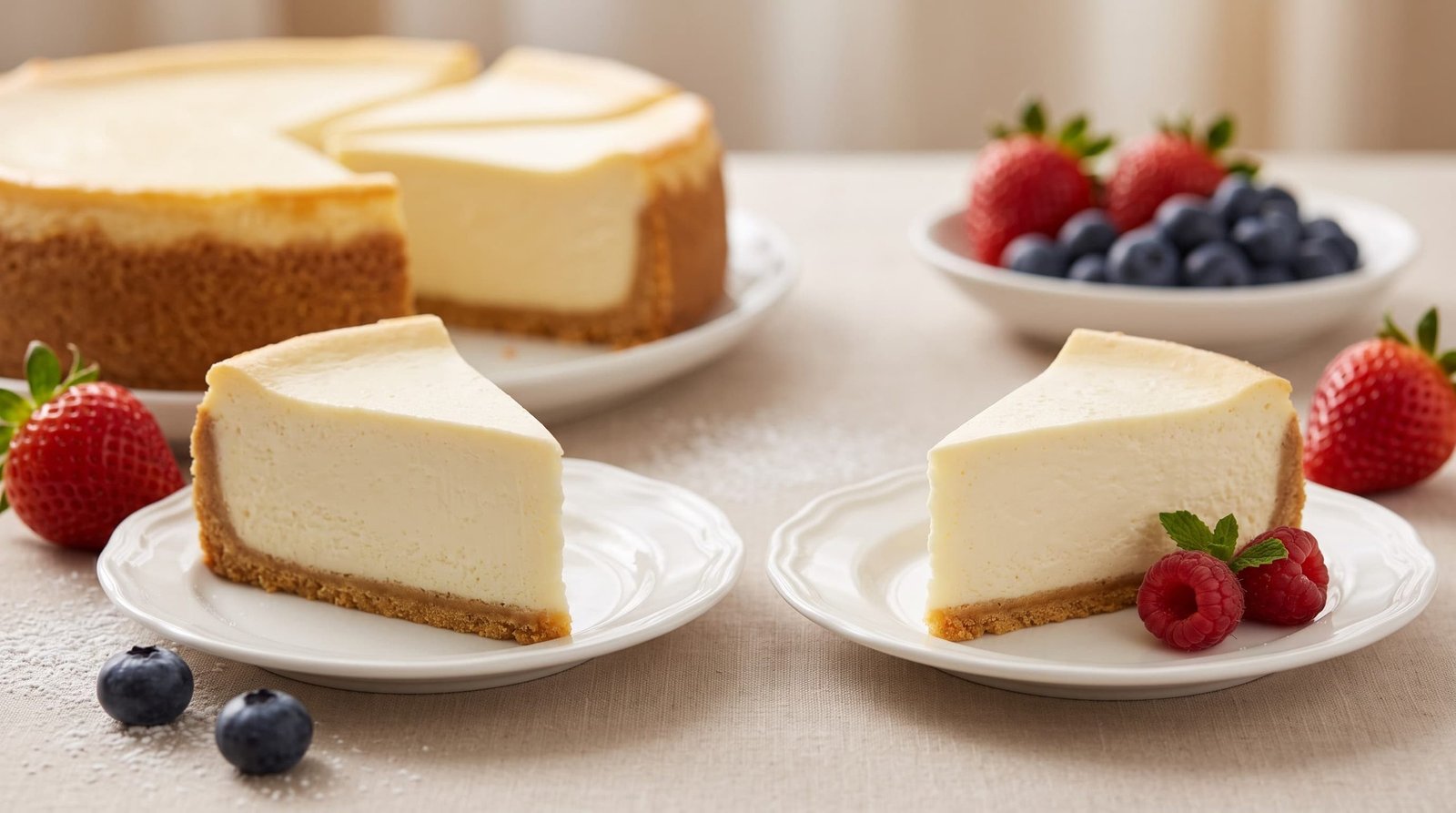
Classic New York Cheesecake
There are desserts that are delicious, and then there are desserts that become unforgettable. Classic New York Cheesecake is one of them.
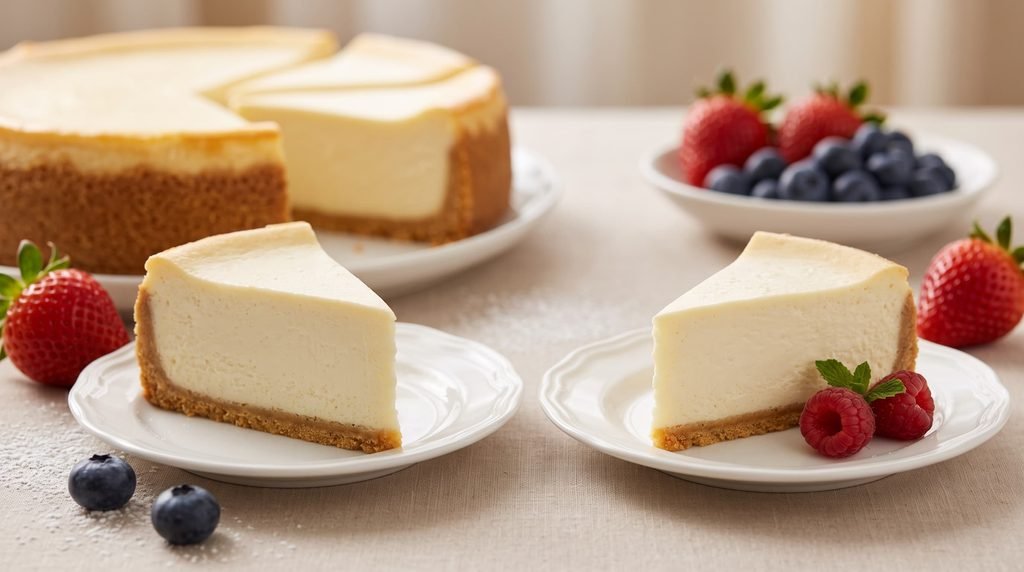
With its buttery graham cracker crust, rich and velvety cream cheese filling, and beautifully smooth top, this cheesecake is the definition of a timeless dessert. It has a luxurious texture without being overly complicated, making it perfect for birthdays, holidays, dinner parties, or simply when you’re craving an impressive homemade dessert.
The secret is in the details: room-temperature ingredients, gentle mixing, a low-and-slow bake, and enough time to cool properly. Follow those simple steps, and you’ll have a cheesecake with the signature dense yet creamy texture that makes New York cheesecake so special.
Why You’ll Love This Cheesecake
- Classic and timeless: A true American dessert favorite.
- Rich and creamy: The filling has an incredibly smooth, luxurious texture.
- Perfectly balanced: The tanginess of cream cheese works beautifully with the buttery crust.
- Elegant presentation: Its clean, smooth appearance makes it perfect for special occasions.
- Easy to customize: Serve it plain or add fresh fruit, berry sauce, caramel, or chocolate.
- Make-ahead friendly: It actually tastes even better after chilling overnight.
What Makes New York Cheesecake Different?
New York cheesecake is known for being richer and denser than many other cheesecake styles.
The filling is primarily made with full-fat cream cheese, eggs, sugar, and a small amount of dairy such as sour cream. Unlike lighter no-bake cheesecakes, this version is baked slowly until the center is just set.
The result is a smooth, substantial cheesecake with a creamy texture that melts in your mouth.
Ingredients You’ll Need
For the Crust
- 2 cups graham cracker crumbs
- 5 tablespoons unsalted butter, melted
- 2 tablespoons granulated sugar
- Pinch of salt
For the Cheesecake Filling
- 32 ounces full-fat cream cheese, softened to room temperature
- 1 1/4 cups granulated sugar
- 1 cup sour cream, room temperature
- 1 teaspoon pure vanilla extract
- 4 large eggs, room temperature
- 2 tablespoons all-purpose flour
- 1 tablespoon fresh lemon juice
- Pinch of salt
For Serving
- Fresh strawberries
- Fresh blueberries
- Raspberry or strawberry sauce
- Powdered sugar, optional
- Whipped cream, optional
The Importance of Room-Temperature Ingredients
This is one of the easiest ways to improve your cheesecake.
Cold cream cheese can remain lumpy when mixed, forcing you to beat the filling longer than necessary. Overmixing introduces excess air, which can contribute to cracks during baking.
Allow the cream cheese, eggs, and sour cream to come to room temperature before you begin.
This small step makes it much easier to create a smooth, uniform batter.
How to Make Classic New York Cheesecake
1. Prepare the Pan
Preheat your oven to 325°F (165°C).
Grease the bottom and sides of a 9-inch springform pan.
For easier removal, you can also line the bottom with a round piece of parchment paper.
Wrap the outside of the pan tightly with two layers of heavy-duty aluminum foil if you plan to use a water bath.
2. Make the Graham Cracker Crust
In a medium bowl, combine the graham cracker crumbs, melted butter, sugar, and salt.
Mix until the crumbs are evenly coated and resemble wet sand.
Press the mixture firmly into the bottom of the springform pan.
Use the bottom of a measuring cup or flat glass to create an even, compact layer.
Bake the crust for about 10 minutes, then remove it from the oven and allow it to cool slightly.
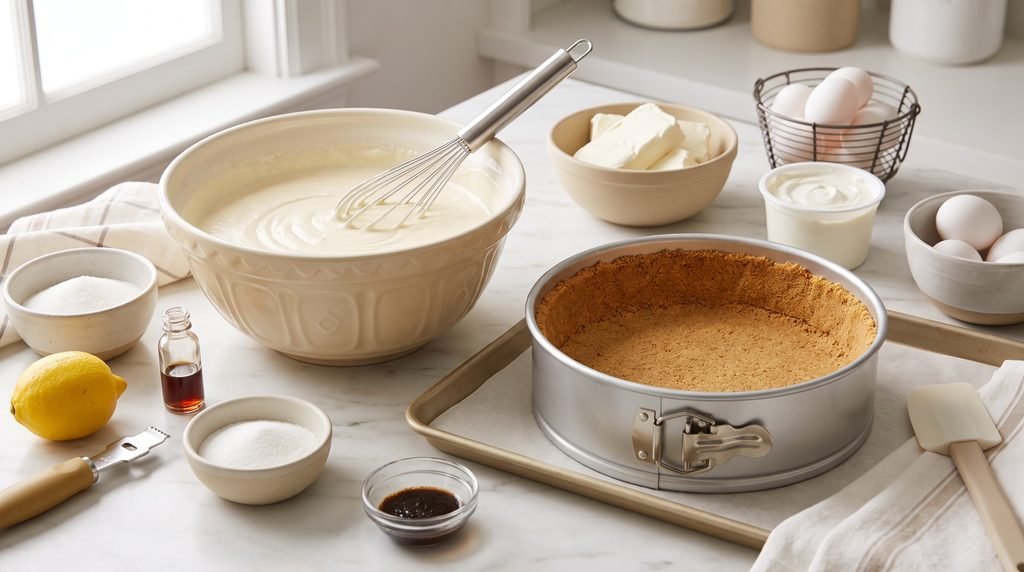
3. Prepare the Cheesecake Filling
In a large mixing bowl, beat the softened cream cheese and sugar on low to medium speed until smooth.
Avoid whipping the mixture aggressively.
Add the sour cream, vanilla extract, lemon juice, flour, and salt.
Mix just until everything is combined.
Add the eggs one at a time, mixing gently after each addition.
Stop mixing as soon as the batter becomes smooth.
4. Pour the Filling Over the Crust
Pour the cheesecake batter slowly over the cooled crust.
Gently tap the pan against the countertop a few times to release any large air bubbles.
Smooth the surface with a spatula if necessary.
5. Bake the Cheesecake
Place the cheesecake in the preheated oven.
For an especially creamy texture and reduced risk of cracking, bake it using a water bath.
Place the foil-wrapped springform pan inside a larger roasting pan and carefully add hot water around it.
Bake for approximately 65–80 minutes, or until the edges are set while the center still has a gentle wobble.
The cheesecake should not look completely firm in the center when you remove it from the oven.
6. Cool Slowly
Turn off the oven and leave the cheesecake inside with the oven door slightly open for about 1 hour.
This gradual cooling helps reduce the chance of dramatic temperature changes that can cause cracks.
Remove the cheesecake from the oven and allow it to cool completely at room temperature.
7. Chill Thoroughly
Once completely cool, cover the cheesecake and refrigerate it for at least 6 hours, preferably overnight.
This step is essential.
Chilling allows the filling to fully set and gives the cheesecake its signature dense, creamy texture.
8. Remove and Slice
Run a thin knife around the edge of the cheesecake before releasing the springform pan.
For clean slices, use a sharp knife warmed under hot water and dried thoroughly before each cut.
Wipe the knife between slices for beautifully clean edges.
Tips for a Crack-Free Cheesecake
Don’t Overmix
Too much mixing incorporates air into the batter, which can cause the cheesecake to puff and crack as it bakes and cools.
Don’t Overbake
The center should still have a slight wobble when the cheesecake is finished.
It will continue setting as it cools.
Use a Water Bath
A water bath provides gentle, even heat and helps maintain moisture inside the oven.
It also helps prevent the cheesecake from becoming dry around the edges.
Cool It Gradually
Avoid moving the cheesecake immediately from a hot oven into a cold environment.
A gradual cooling process helps minimize temperature shock.
Chill Overnight
If you have enough time, refrigerate the cheesecake overnight before slicing.
The texture becomes firmer, smoother, and easier to cut.
What If Your Cheesecake Cracks?
Don’t worry.
A crack doesn’t affect the flavor or creamy texture of the cheesecake.
You can easily cover it with fresh berries, whipped cream, fruit sauce, chocolate ganache, or caramel.
The important thing is that the cheesecake is fully cooked and has the texture you want.
Delicious Topping Ideas
Classic New York cheesecake is delicious on its own, but toppings can make it even more special.
Try serving it with:
- Fresh strawberries
- Blueberry sauce
- Raspberry sauce
- Cherry compote
- Salted caramel
- Chocolate ganache
- Whipped cream
- Lemon curd
- Fresh mixed berries
- Toasted nuts
For a classic presentation, fresh berries and a light drizzle of berry sauce are all you need.
Easy Variations
Strawberry Cheesecake
Top each slice with fresh strawberries and homemade strawberry sauce.
Blueberry Cheesecake
Add blueberry compote over the chilled cheesecake for a sweet and slightly tangy finish.
Lemon Cheesecake
Increase the fresh lemon flavor by adding a little finely grated lemon zest to the filling.
Chocolate Cheesecake
Add melted semi-sweet chocolate to the filling for a rich chocolate variation.
Caramel Cheesecake
Drizzle chilled slices with salted caramel and finish with a small sprinkle of flaky sea salt.
How to Store New York Cheesecake
Store cheesecake covered in the refrigerator for up to 5 days.
Because cheesecake absorbs odors easily, keep it tightly covered or place it in an airtight container.
For the cleanest slices, cut only what you plan to serve and keep the remaining cheesecake chilled.
Can You Freeze Cheesecake?
Yes, cheesecake freezes beautifully.
For individual portions, cut the fully chilled cheesecake into slices and wrap each slice tightly in plastic wrap.
Place the wrapped slices in a freezer-safe container or bag.
Freeze for up to 2 months for the best quality.
Thaw individual slices overnight in the refrigerator before serving.
Frequently Asked Questions
Why does my cheesecake crack?
Cracks can happen from overmixing, overbaking, sudden temperature changes, or skipping the water bath. Fortunately, small cracks are purely cosmetic.
How do I know when cheesecake is done?
The edges should look set while the center should still have a slight, gentle wobble. It will continue to firm as it cools.
Why does cheesecake need to chill overnight?
Chilling allows the filling to fully set and develops the dense, creamy texture associated with classic New York cheesecake.
Can I make cheesecake without a water bath?
Yes. A water bath isn’t absolutely required, but it can help create a more evenly baked cheesecake and reduce the likelihood of cracks.
Can I use low-fat cream cheese?
Full-fat cream cheese is recommended for the richest texture and most traditional result. Lower-fat varieties can produce a softer or less creamy cheesecake.
How do I get clean cheesecake slices?
Use a sharp knife, warm it under hot water, dry it completely, and make a clean cut. Wipe the knife between slices and repeat.
Final Thoughts
Classic New York Cheesecake is the kind of dessert that never goes out of style.
Its buttery graham cracker crust, rich cream cheese filling, and irresistibly smooth texture make it a recipe worth mastering. The process takes a little patience, especially when it comes to cooling and chilling, but the result is more than worth the wait.
Serve it simply with fresh berries, dress it up with a homemade fruit sauce, or enjoy a perfectly chilled slice just as it is.
Once you pull that first creamy, beautifully chilled slice from the refrigerator, you’ll understand why this classic has remained a favorite for generations.